
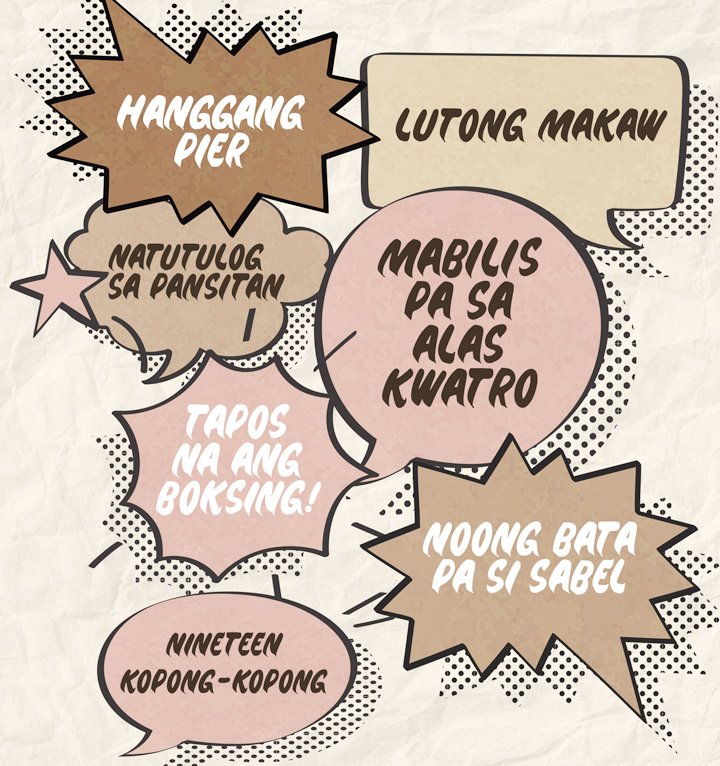
Moving to Manila taught me that knowing English does not mean understanding everything people say. Sometimes, Filipino expressions sound completely different from what they actually mean.
At first, I would hear these phrases during conversations and simply smile. I did not want anyone to notice that I was completely confused.
Coming from Vietnam, I was already used to switching between different languages. However, Filipino expressions gave me a completely different language experience.
Some phrases seemed easy to understand because I knew their English translations. Their actual meanings often depended on the situation, tone, and relationship between people.
“Mamaya Na” Does Not Always Mean Later
One expression that confused me was “mamaya na.” I understood that it meant something would happen later.
The confusing part was figuring out exactly when “later” would happen. Sometimes, it meant a few minutes later, while other times it meant much longer.
As a college student, I eventually started using the phrase myself. It became surprisingly useful whenever I wanted to postpone something.
Another expression I heard constantly was “bahala na.” At first, I thought it meant completely giving up on a situation.
My Filipino friends explained that it can also express acceptance or trust. It can sound like accepting whatever happens next.
That reminded me of how Vietnamese conversations can also depend heavily on context. Sometimes, the literal translation does not explain the feeling behind an expression.
Words I Started Using
I also noticed how Filipino words casually appear during English conversations. Words like “kilig,” “gigil,” “sayang,” and “ate” quickly became familiar to me.
I started understanding these words without translating them in my head. Eventually, some of them even became part of my everyday vocabulary.
“Sayang” was especially interesting because it can express disappointment about something being wasted. I heard it used for missed opportunities, unfinished food, and many other situations.
“Ate” also taught me something about Filipino culture. It can be used when addressing an older female, even without a family relationship.
That felt different from how I usually think about family titles in Vietnam. It showed me how language can reflect respect and social relationships.
Learning Through My Friends
My Filipino friends became my unofficial language teachers. They explained expressions whenever I looked confused during conversations.
Sometimes, their explanations made me laugh because the literal meaning sounded completely different. These small moments also made it easier for me to feel comfortable in Manila.
I slowly realized that learning Filipino expressions was also learning about Filipino culture. Language showed me how Filipinos joke, show respect, express emotions, and interact with friends.
It also made me more comfortable making mistakes. Instead of worrying about understanding everything immediately, I learned to ask questions.
Now, when someone says “mamaya na,” I understand the assignment. I may not know exactly when “later” will happen, but I know not to panic.
Living in Manila has made my vocabulary a funny mixture of Vietnamese, English, and Filipino. Somehow, that mixture feels like an accurate description of my life between two cultures.

Vietnamese girl + Manila college life = endless culture shocks. I’m a Communication Arts student exploring the funny, surprising, and sometimes confusing differences between Vietnam and the Philippines. Basically, I’m here to answer one question: Pho real? 🍜